InnKuBaTubes - The dyke of the future
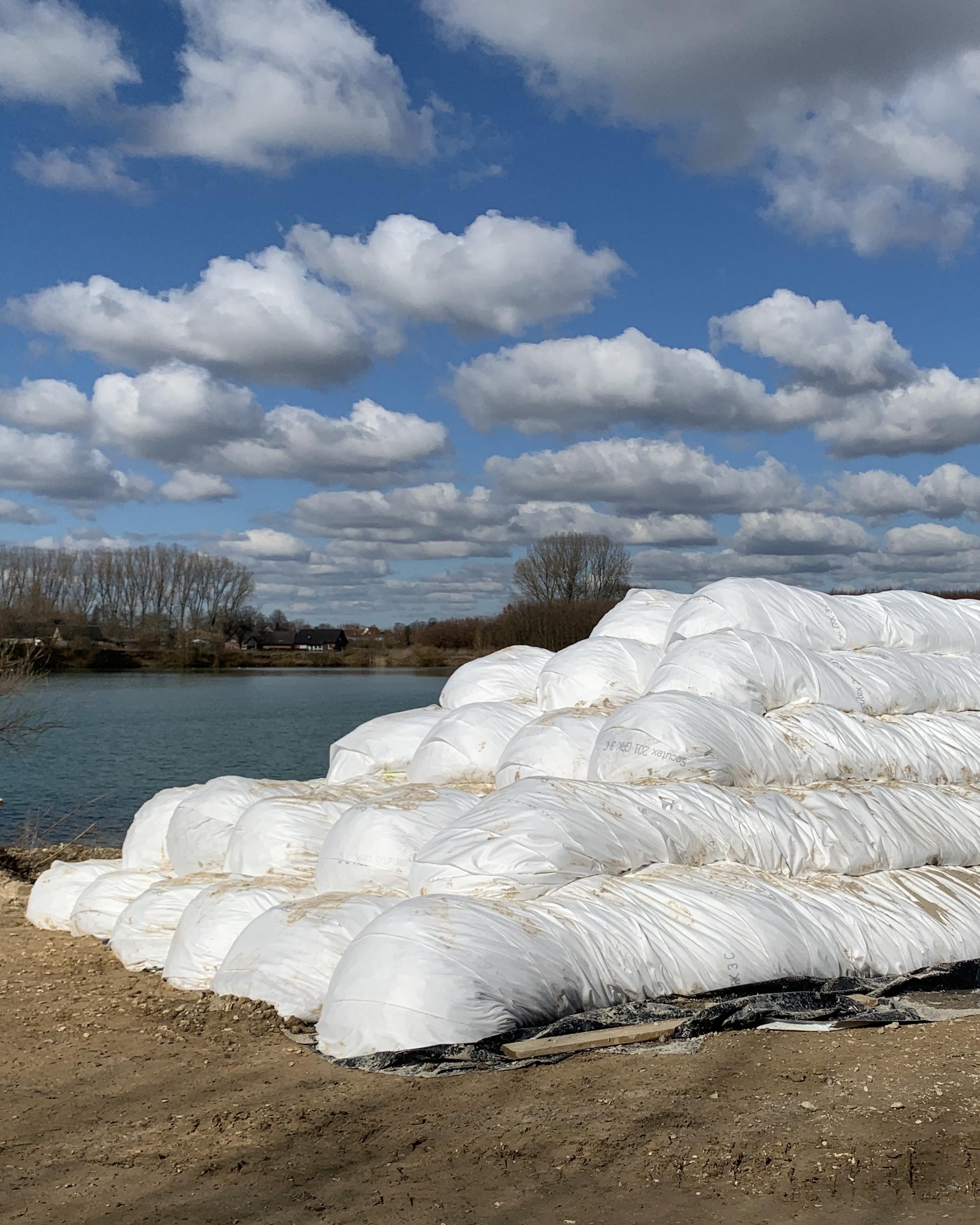
Effective flood protection requires dykes that meet the technical requirements and can also be constructed and operated in a sustainable, resource-conserving and near-natural way. In view of climate change, it is becoming more difficult to construct dykes. This is because if the design basis changes and, for example, the flood is higher than previously assumed, the dykes must be able to withstand this. This also means that, in case of doubt, they must be able to overflow without breaking away at the bottom.
Dikes constructed in a sustainable and resource-saving way
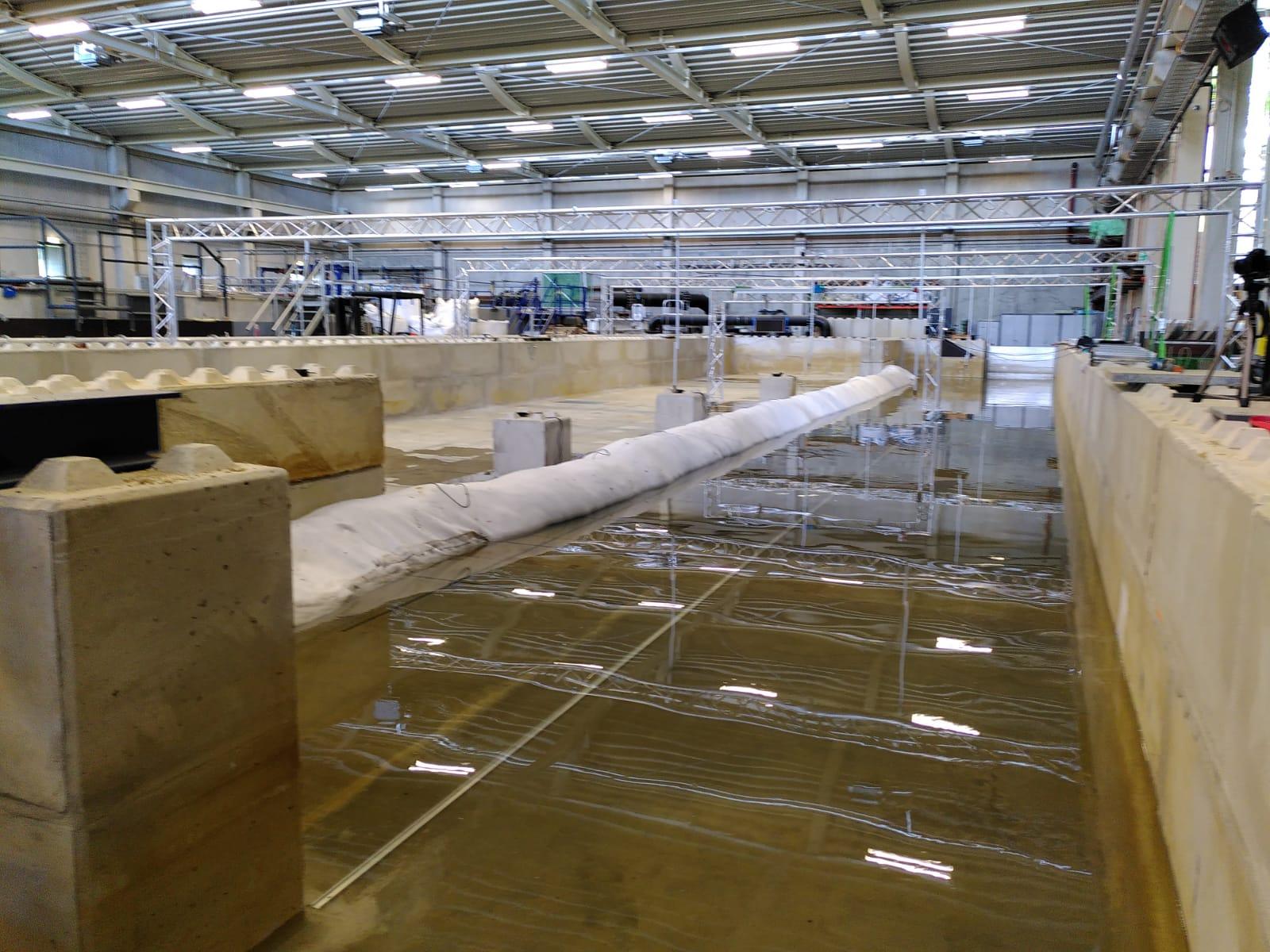
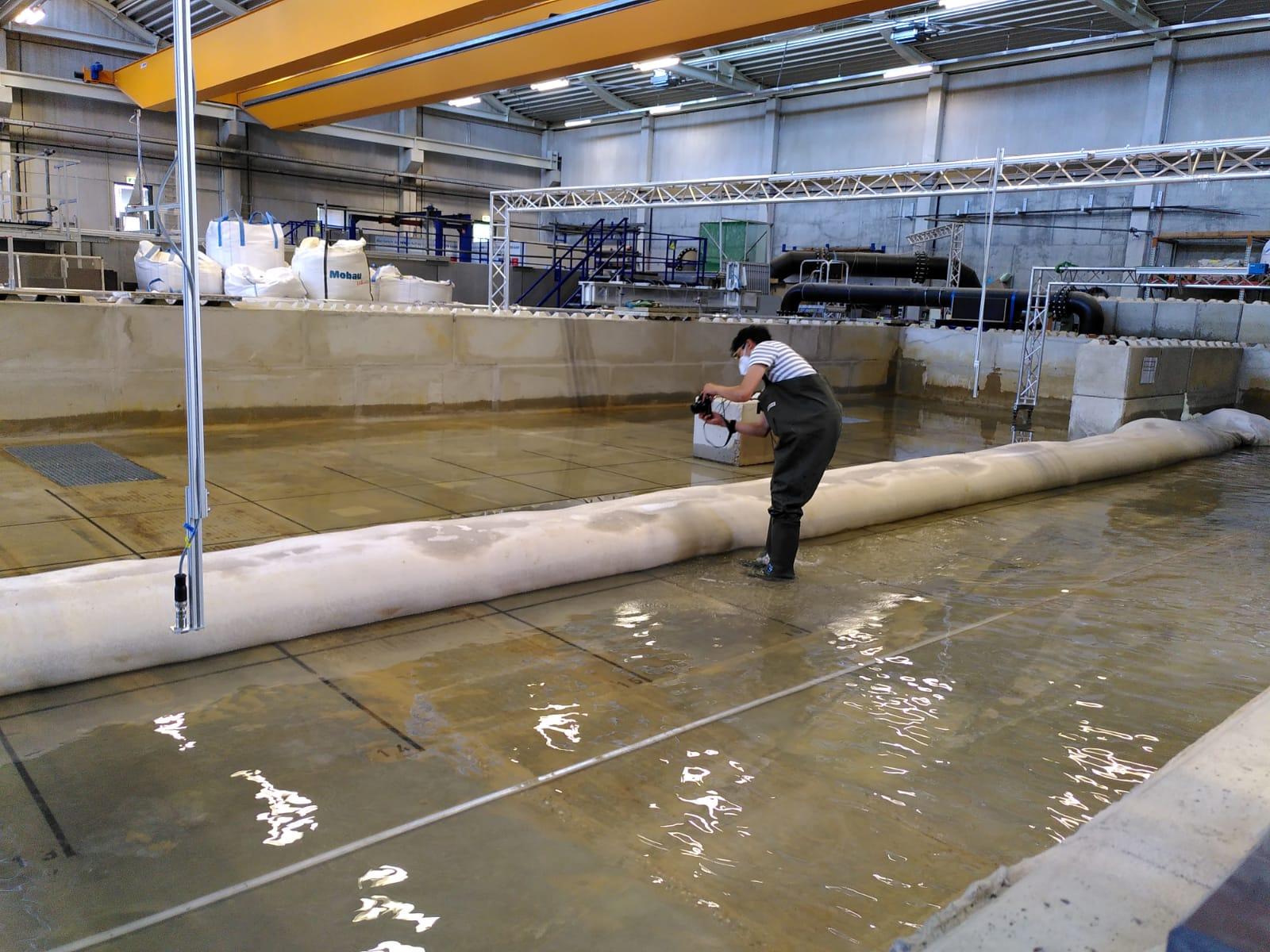
In order to construct the dike of the future, the "InnKuBaTubes" project, funded by the ERDF NRW program, therefore researched dikes and dams made of geotextile tubes filled with soil. This innovative construction method makes it possible to build steeper embankments with less material and land consumption and to create dam constructions that are resistant to overflow. At the same time, the combination of textile and soil makes it possible to use soils that were previously unsuitable for dam construction. This enables the sustainable and resource-saving construction of such structures, which helps to achieve the EU climate targets.
Large-scale trial gathers important findings
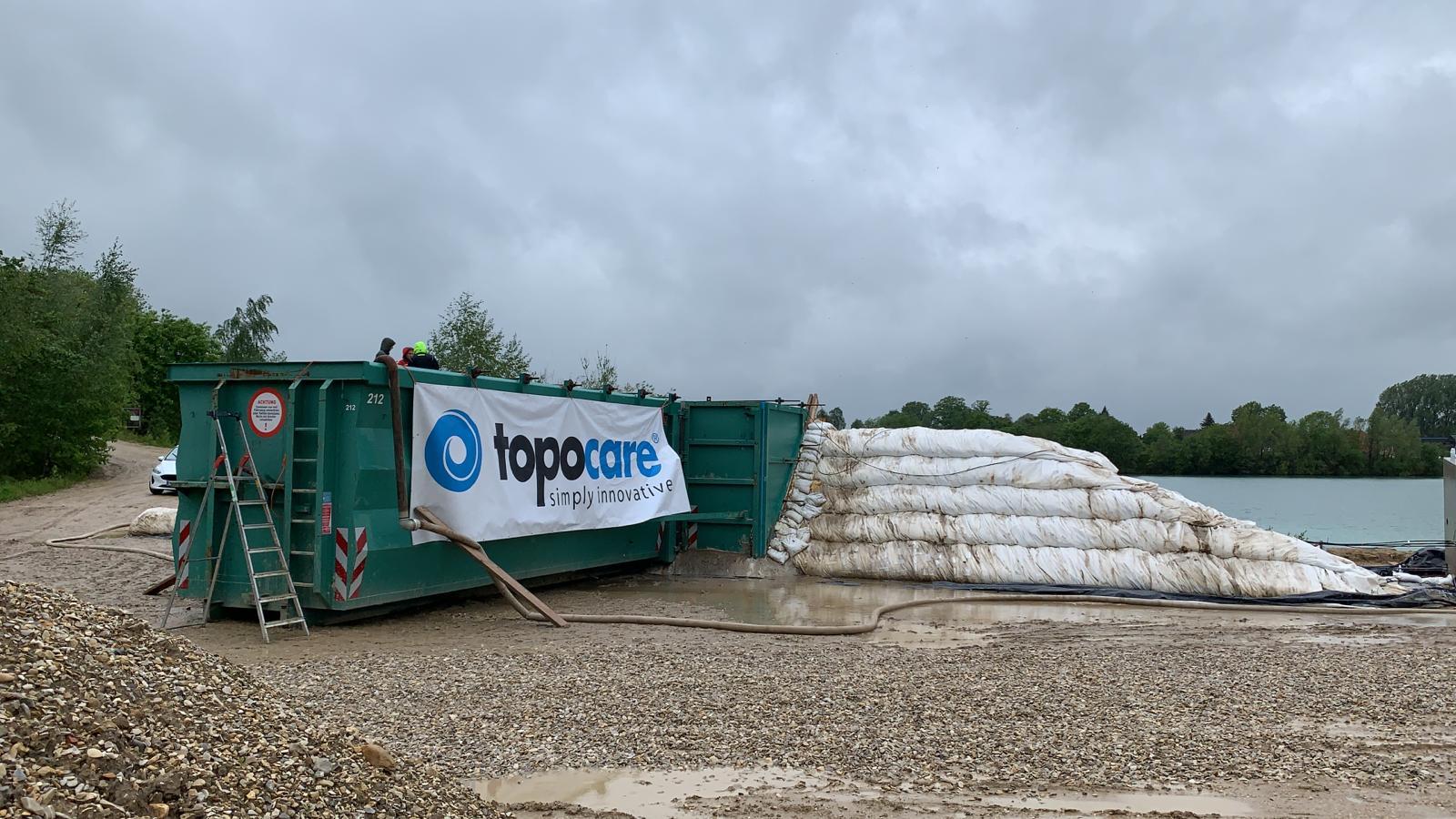
As part of the project, the Ahle company in Lage-Müssen carried out a large-scale trial at the gravel works. The aim was to test this new type of dyke and gain important insights for practical use. The company examined two separately constructed dyke cross-sections, which differ in terms of permeability and impermeability and were previously determined on the basis of laboratory tests and calculations. In order to load the two dykes, the testers set up a container perpendicular to the longitudinal direction of the dyke. During the test phase, they filled it with different water levels to simulate water masses. They then overflowed and loaded the top of the dyke to simulate driving over the dykes.
Results will be made available to everyone
The aim was to derive information for the optimal future construction of dykes. Initial results have shown that the new dyke construction method makes it possible to build a slender, stable, more resistant and flood-proof structure in a relatively short time - with lower equipment and material requirements. This also has a positive effect on the CO2 balance and land consumption. The results of the project are to be translated into general information that will make the advantages of the new construction method accessible to as many users as possible in the field of hydraulic engineering and dyke construction.