Droste Welten – Rethinking Literature, Landscape, and Digital Experiential Spaces
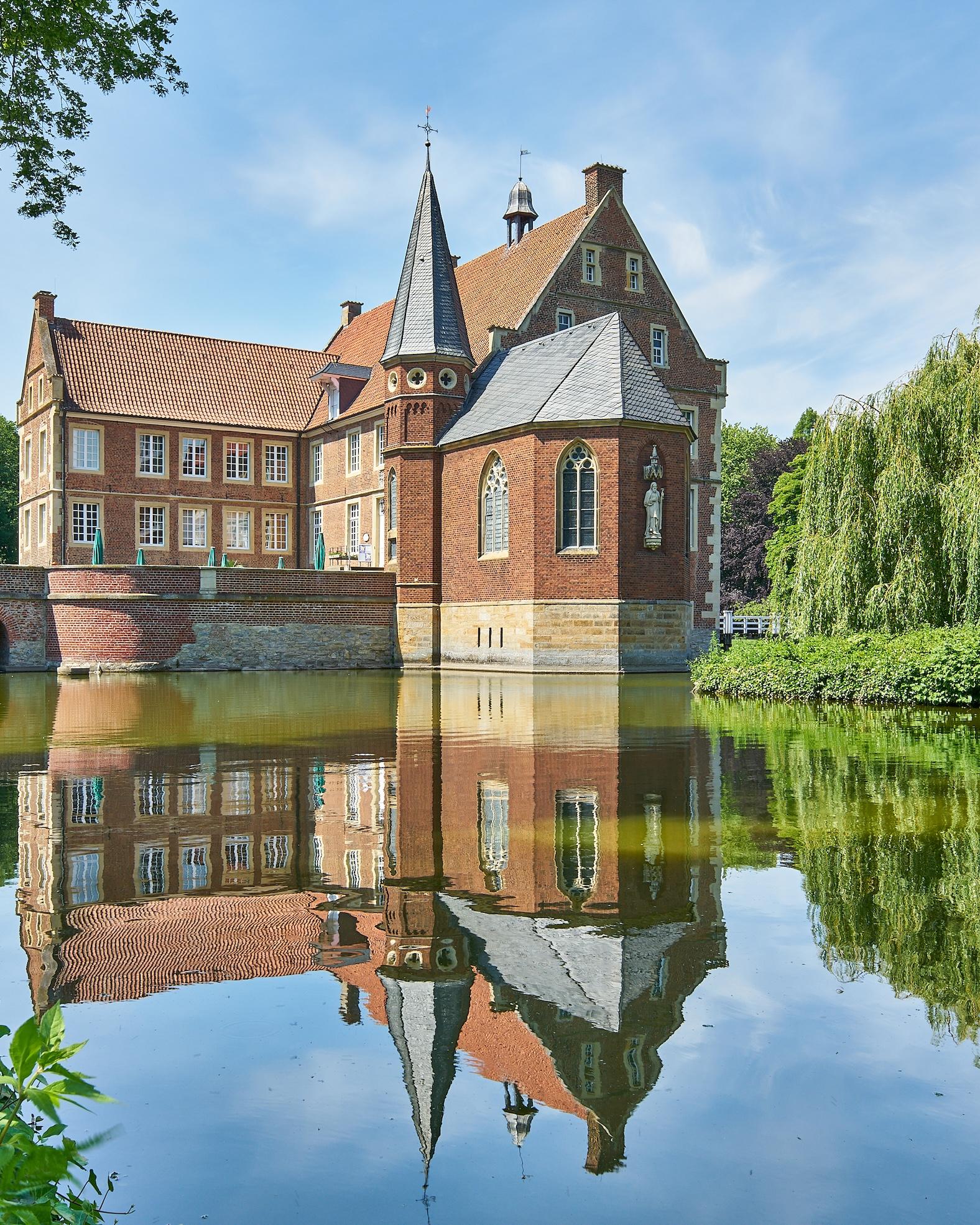
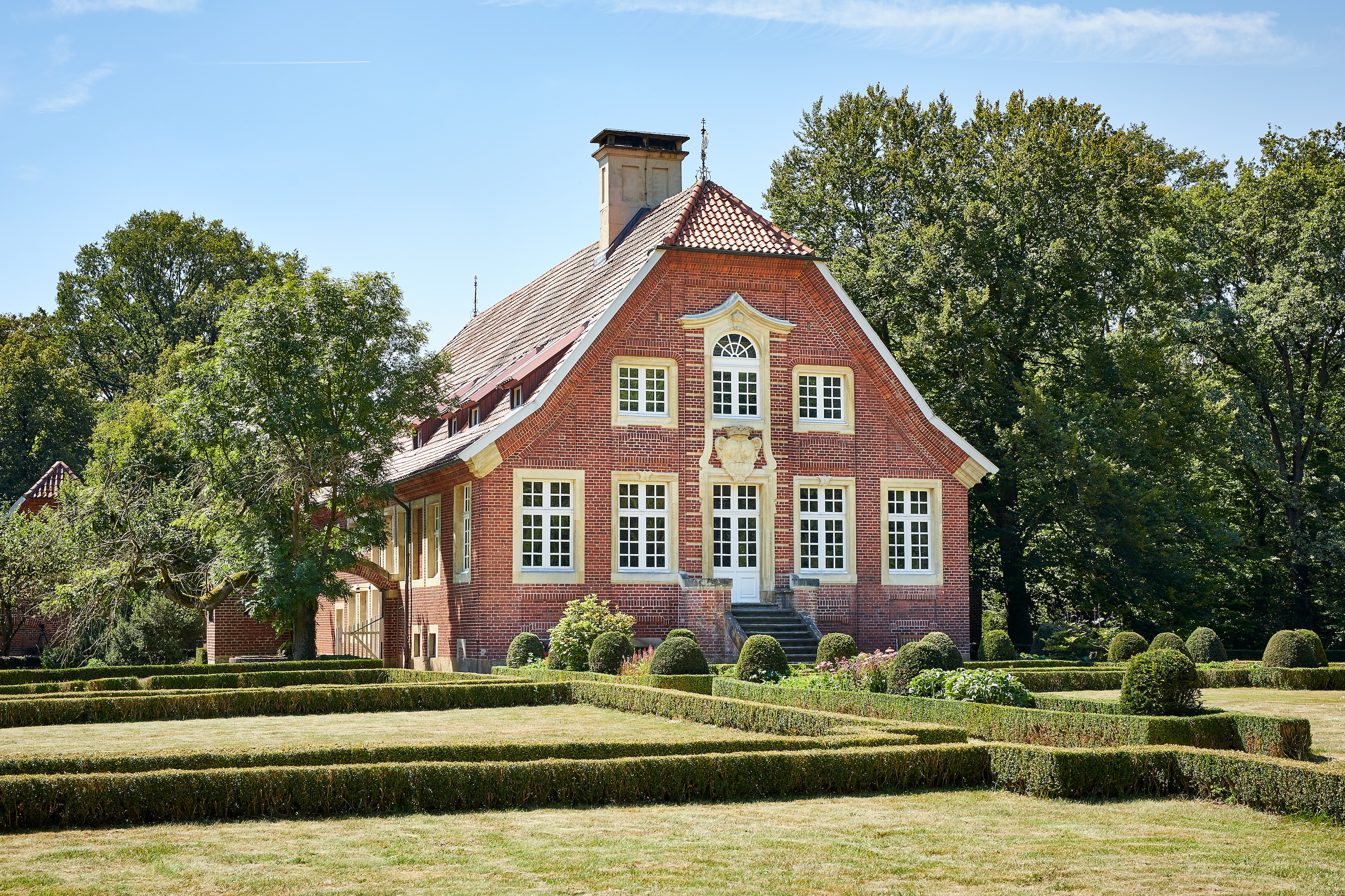
At the heart of Droste Welten are the poet’s authentic sites of activity: the Rüschhaus in Münster-Nienberge and Hülshoff Castle in Havixbeck, connected by the seven-kilometer-long Poetry Trail and expanded to include the Digital Castle as an online destination. Together, they form the “Droste Welten” ensemble—a network that connects history, nature, and literature.
New Approaches to Literature
A central goal is to make literature accessible to a diverse range of visitors. The museums at Hülshoff Castle and the Rüschhaus are undergoing conceptual development and are being tailored more closely to specific target audiences. Digital, analog, and hybrid applications, interactive offerings, and playful elements open up new, low-threshold avenues of engagement and encourage active exploration. One example is the participatory garden at Rüschhaus, where visitors can plant and harvest crops, but where readings also take place. In this way, social change becomes visible, and differences between the 19th and 21st centuries can be experienced firsthand.
Model Project for the Region
“Droste Welten” conceives of culture in harmony with the landscape. Nature and cultural experiences intertwine, enhanced by the gardens’ nature-oriented design, the promotion of biodiversity, and improvements in accessibility. “Droste Welten” sees itself as a model project for experiential tourism: it combines nature and culture, knowledge transfer and artistic formats, analog and digital elements, as well as historic preservation and public participation. The goal is to sustainably enhance the appeal of the entire site, provide new impetus for the region’s cultural and tourism development, and position it as a destination for sustainable tourism.

Related Links and Downloads