Sustainable water management on the Erft - Rhenish mining district on the way to becoming a model region
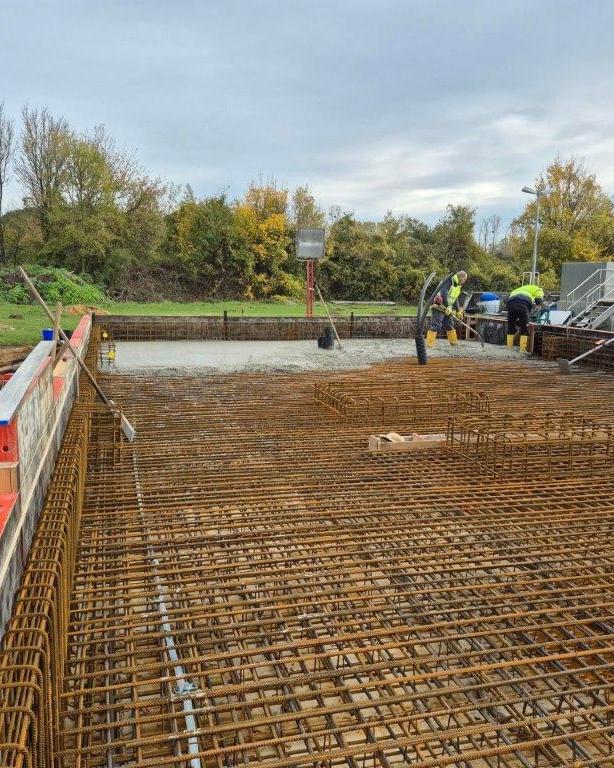
As a result of the structural change, the Erftverband is implementing four key water management projects with the help of funding from the Just Transition Fund (JTF): the wastewater treatment plants in Grevenbroich, Kenten, Rödingen and on the North Canal in Kaarst are helping to safeguard water quality in the water bodies and promote sustainable development in the Rhenish mining area. The common goal of the state, EU and Erftverband is to make the Rhenish mining area a model water management region in NRW.
Efficient wastewater treatment key for the region
With the phasing out of lignite mining, water management and wastewater treatment in the Rhenish mining area are facing new challenges. In order to clean the wastewater efficiently, innovative technical solutions are being used in the subsidized wastewater treatment plants and the infrastructure is being modernized in a targeted manner. In addition to protecting the environment, this also creates performance reserves in wastewater treatment, which can promote the establishment of new industries - and thus new jobs.
Technological innovations for better water quality
The measures range from the introduction of new process water treatment plants and the optimization of existing wastewater treatment plants to the construction of a new fourth treatment stage to reduce micropollutants. Modern and energy-saving processes such as deammonification for targeted nitrogen elimination and sophisticated membrane technology are used, which, in combination with activated carbon, can largely remove multi-resistant germs, microplastics and, above all, anthropogenic trace substances from the natural cycle in just one process stage. This protects local and regional waters while also increasing the energy efficiency of the plants.
Model for sustainable water management
The four wastewater treatment plants safeguard the water quality in the region's water bodies and enable increasing environmental protection requirements to be implemented economically. They are spatially and thematically networked and ensure cleaner water and natural bodies of water. At the same time, they improve the local infrastructure. The result: sustainable water management is driving the ecological transformation in the Rhenish mining area.