prefabPV - Integration of photovoltaics into the railroad infrastructure
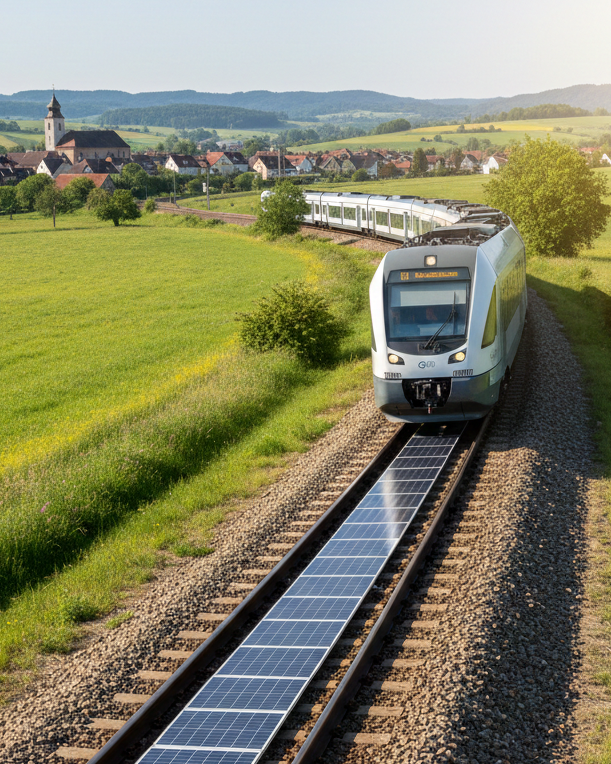
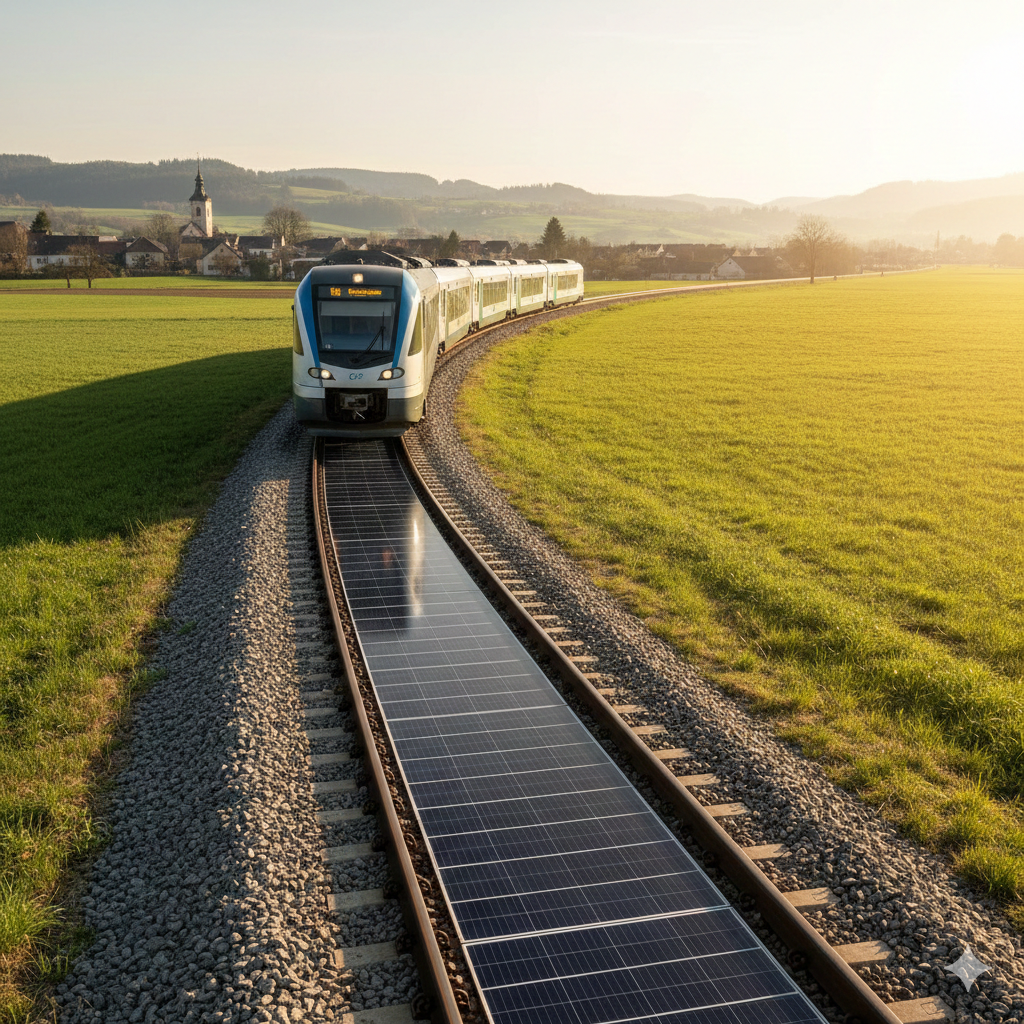
Train tracks as potential space for energy generation? Qfab Solar GmbH had this idea and is developing an innovative solution in its "prefabPV" project to integrate renewable energies directly into existing transport infrastructure.
To this end, the team is working on a production-ready manufacturing and mounting system that safely and efficiently integrates photovoltaic modules into railway tracks. The approach combines technical innovation with resource conservation - and at the same time addresses a central question of the energy transition: How can we make smarter use of existing infrastructure instead of sealing off new areas?
Why new photovoltaic solutions are needed
Regenerative energies are a key component for the successful transformation of the energy system. Photovoltaics (PV) plays a key role in this, but traditional ground-mounted systems are increasingly competing with agricultural use. Decentralized solutions that do not require additional land are in demand. Photovoltaic systems that are integrated into traffic routes, such as railroad tracks, offer a promising approach here, as they can feed energy directly into the railroad power grid or the adjacent infrastructure.
From vision to technological development
The idea of using photovoltaic modules in railroad tracks is not new. The first patents for this were submitted back in the late 1990s. The constructive development of the PV power plant and the track-bound installation system has been significantly advanced by QINUM GmbH in recent years, including with the support of the German Federal Environmental Foundation (DBU) in the "RailPV" and "RoboPV" projects. "prefabPV" builds on this preliminary work without overlapping it and adds the industrial perspective of serial prefabrication.
A modular system for efficient track installation
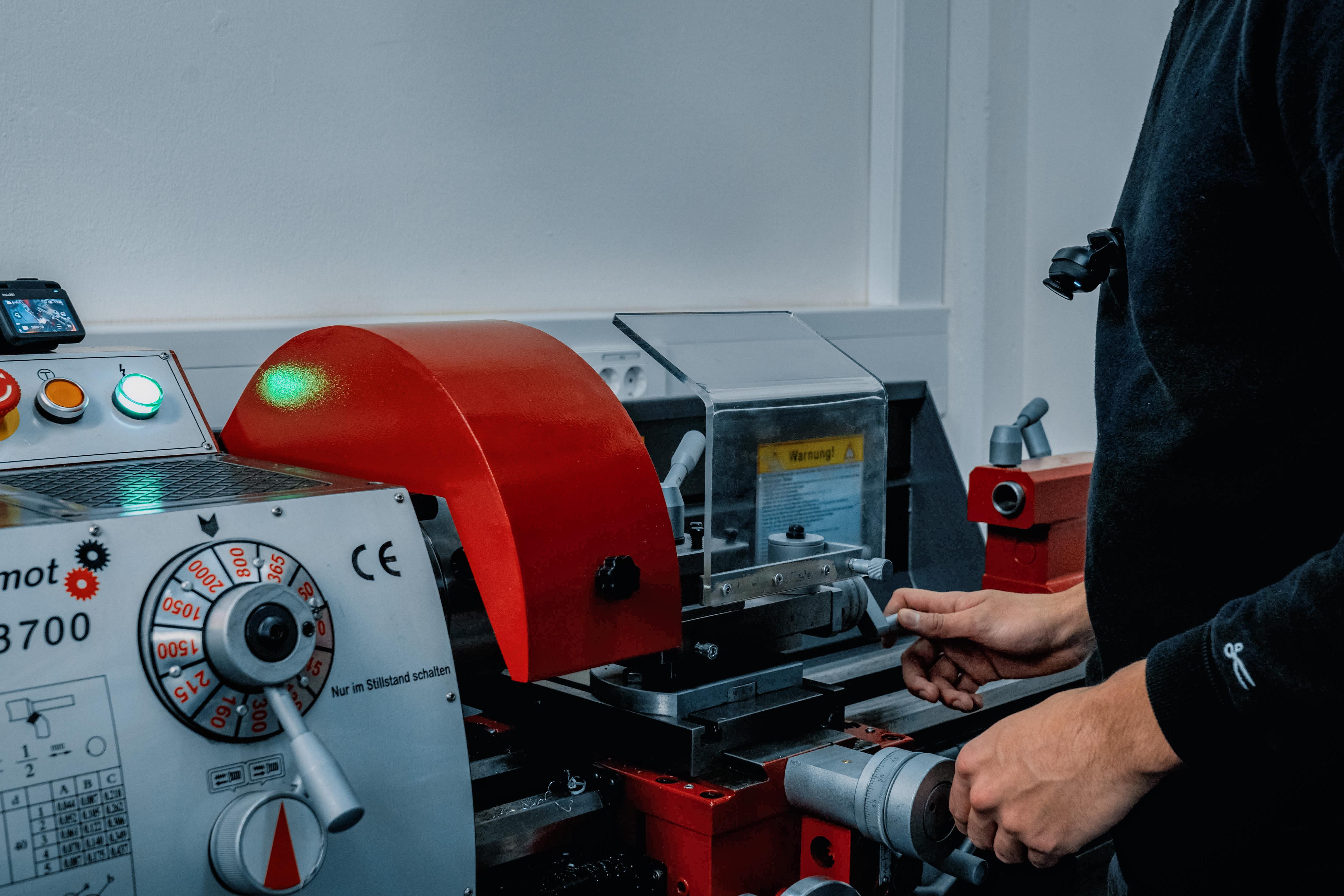
The project focuses on the research and development of a serial, semi-automated manufacturing and assembly system for PV power plants. The intended prefabricated construction principle makes it possible to pre-produce PV power plant modules ready for installation, transport them efficiently and install them on site in modular form or dismantle them if necessary. Compared to previous, predominantly manual installation methods, this approach opens up new potential, particularly in terms of scalability, cost-effectiveness and process reliability.
Industrialized process - regional expertise
The industrialization of prefabrication and assembly processes can reduce costs per kilowatt peak and improve quality assurance. At the same time, the project draws on regional expertise in the fields of energy generation, production technologies and rail vehicle construction. The scientific expertise of RWTH Aachen University complements these strengths and creates a reliable basis for further technological developments.
Scalable potential for energy and mobility
In addition to the actual generation of energy, the technology opens up further development prospects. These include applications on disused or low-traffic sections of track, contributions to the electrification of branch lines and approaches to supplying energy to battery-electric rail vehicles. The manufacturing and assembly processes developed as part of the "Grüne Gründungen.NRW" funding measure are an essential prerequisite for being able to implement such applications economically.
Prospects for European cooperation
Because of the location in the border triangle Belgium-Netherlands-NRW, there are favourable conditions for the prospective integration of European partners. Following the successful testing of the first plants, the exchange with other players in the Euregio and beyond is to be intensified in a targeted manner.
Setting the course by 2027: From pilot plants to market entry
The plan is to further test the manufacturing and assembly concepts developed in the "prefabPV" project by 2027 using pilot plants and prepare them for broader application. From 2026, two plants are to be installed in the Rhenish mining area and used for technical and economic validation. Furthermore, "prefabPV" could help to actively support structural change, strengthen regional innovation capacities and set an example for the effective use of public funding.