KneTex - Sensor-assisted treatment of cruciate ligament tears
On average, someone in Germany tears their cruciate ligament every six and a half minutes. That's around 80,000 cases a year - and more than a million worldwide. A torn cruciate ligament is a typical sports injury that mainly occurs during sports such as soccer or skiing. The anterior cruciate ligament is particularly frequently affected. Patients often suffer from the so-called "giving way phenomenon", an unstable knee, long after the accident and despite successful surgery. The probability of suffering a relapse and new knee damage is very high with this type of injury.
Interdisciplinary collaboration
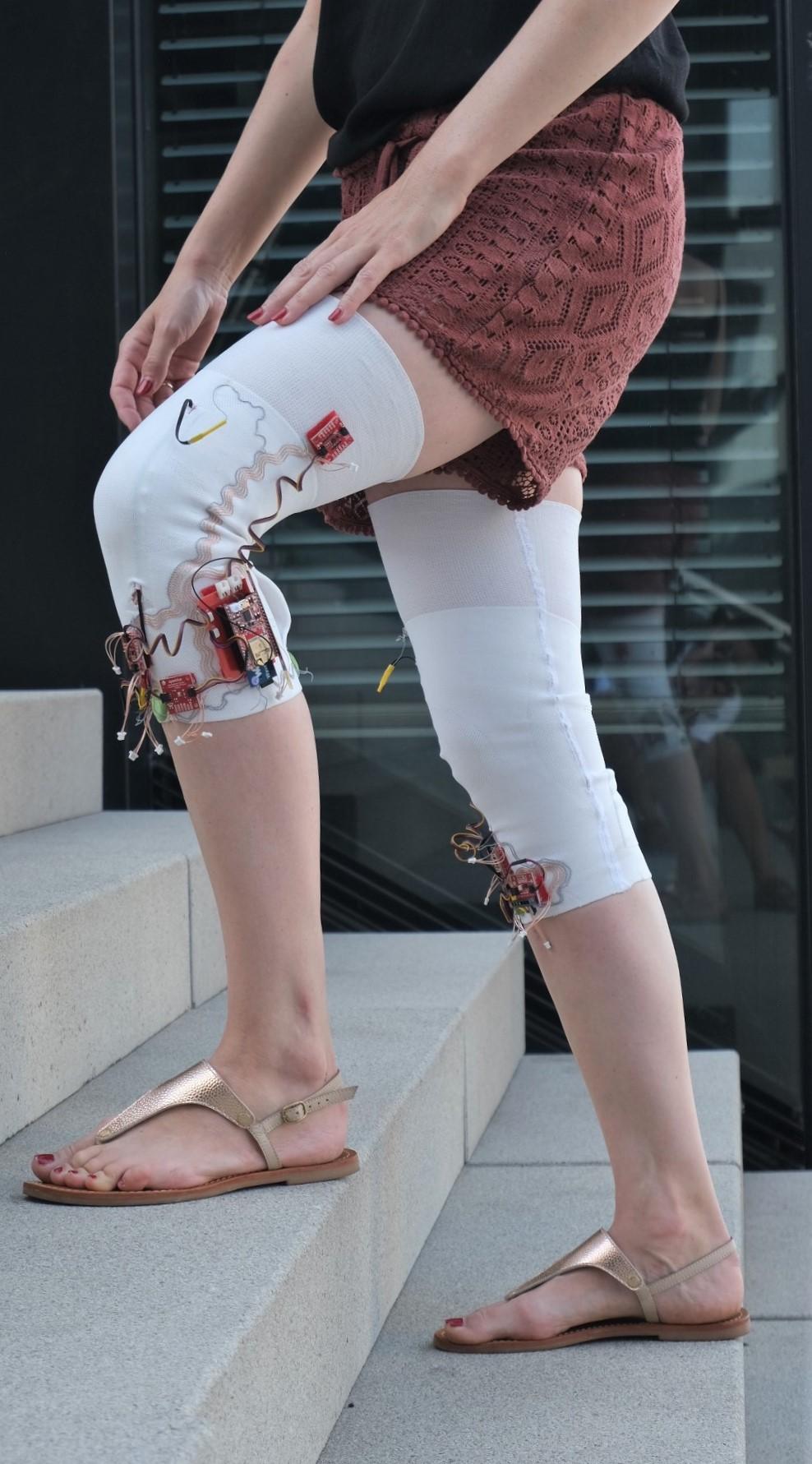
The KneTex research project, funded by the ERDF NRW, has developed a "smart" knee support in the form of a textile-integrated sensor system for feedback-supported rehabilitation in an interdisciplinary collaboration. The collaboration between the project partners Institute for Experimental Psychophysiology, Bache Innovative and Niederrhein University of Applied Sciences involved four different departments: Healthcare, Electrical Engineering and Computer Science, Textile and Clothing Technology and Design. This created a diverse and productive working environment to create innovative solutions.
Bandage with sensors
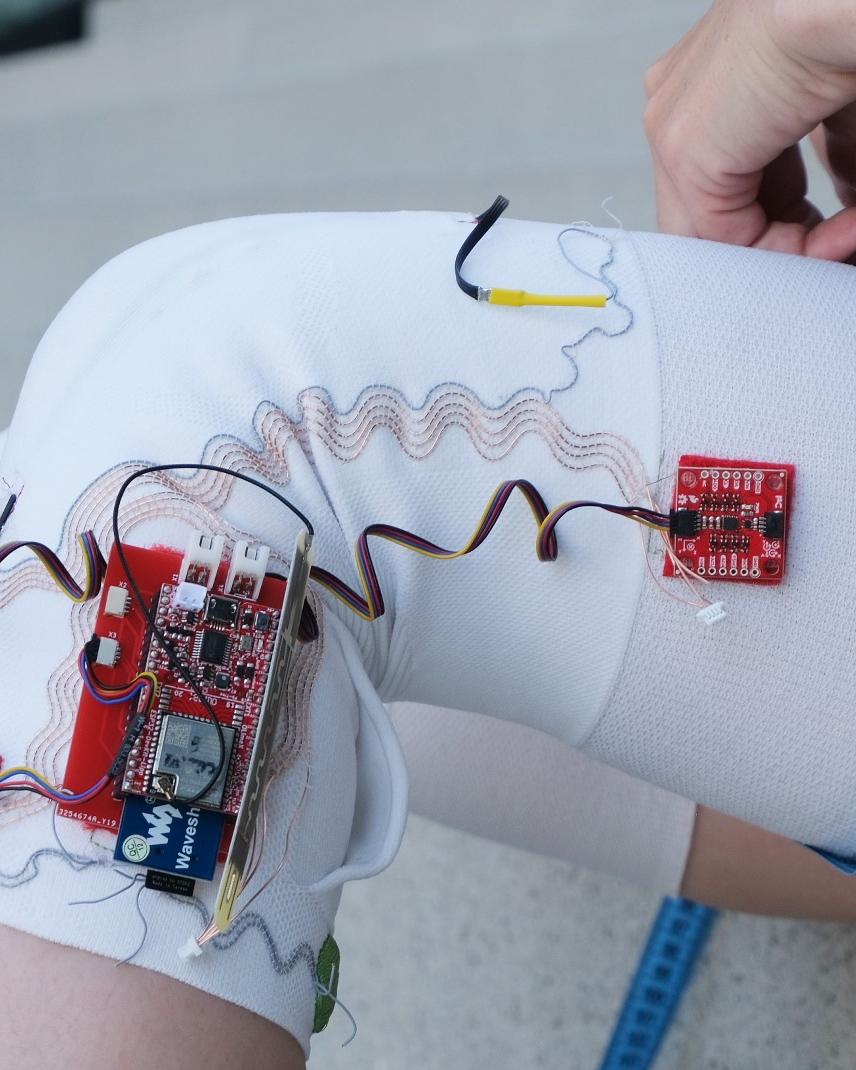
The overarching goal was to record and sustainably improve the movement behavior of patients in everyday life and during therapeutic exercises. After analyzing and comparing various physically perceptible stimuli, vibration was chosen as a promising feedback method for the KneTex support. Special sensors were developed, tested and optimized to record leg movements. They can be integrated into the textile of the high-quality knee support, which was also developed as part of the project. The focus was on the user-centered design of the support, which is linked to an interface for physiotherapists and patients via an interface for displaying the recorded data.
Improved healing
The result of the KneTex project is a textile and wearable smart knee support that can help patients heal better after an anterior cruciate ligament injury. The textile, which is equipped with sensors, detects the movements of the leg and provides immediate feedback to the patient through vibration. In this way, incorrect posture and incorrect strain can be avoided and behavior conducive to healing can be encouraged.