EcoTwin - digital twin optimizes urban green spaces
The overall aim of the project is to link available environmental data from urban green spaces and make it available to the responsible municipal decision-makers in the form of a "digital twin". With this tool and its automated forecasts, climate and disaster prevention measures can be effectively implemented on a site-specific basis.
Urban green spaces as a contribution to climate change mitigation
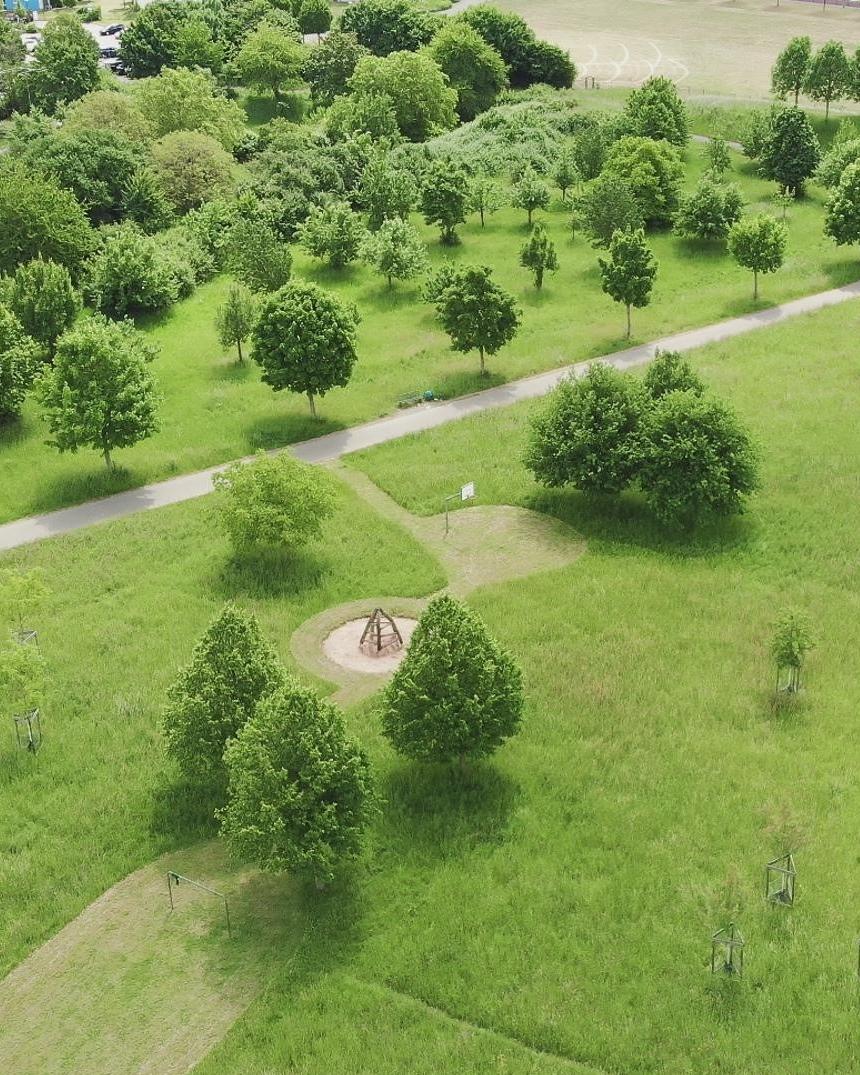
Heatwaves with extreme drought or heavy rainfall with flooding are extreme weather events that are occurring more and more frequently due to the climate crisis. The situation is exacerbated by increasing urbanization, which leads to high land consumption. This makes it all the more important to use unsealed urban green spaces in a climate-resilient way. They can cool and store water - as well as promoting biodiversity and promoting people's well-being and recreation. Whether and how urban green spaces can contribute to climate protection depends above all on the characteristics of the location. The aim of EcoTwin is to record and evaluate these.
Collecting and digitally processing data
Large amounts of useful environmental data are already being collected in NRW, but there is still room for improvement when it comes to processing and visualization. EcoTwin wants to change this: A "digital twin" provides support so that municipal decision-makers can work with the available environmental and geodata. This is a dynamic, virtual copy of a real object that digitally maps its properties and behavior. It is created and continuously updated by capturing and processing real-time data from the real world. In the EcoTwin, various sensors record weather data or the water balance in the soil, for example, and automatically integrate and transfer them to the digital twin, which acts as a central point of access to all relevant information.
Complex but user-friendly
The result: users in municipalities can identify specific green spaces that need to be watered, for example, or forecast the water requirements of plants. Combined with artificial intelligence, working with EcoTwin is very intuitive and queries can be formulated in natural language. The interdisciplinary team behind EcoTwin wants to provide local authorities with a tool that combines complex specialist data, for example on soil conditions, with easy-to-understand and scientifically sound recommendations for action.
EcoTwin was selected in the first round of the Regio.NRW - Transformation competition.

640.000 Euro
EU-Fördermittel
Project partners
Hochschule Bonn-Rhein-Sieg, RF-Frontend GmbH, Technology Arts Sciences TH Köln, GIQS e.V.