
SuSyPhos – Turning Sewage Sludge and Manure into Battery Material
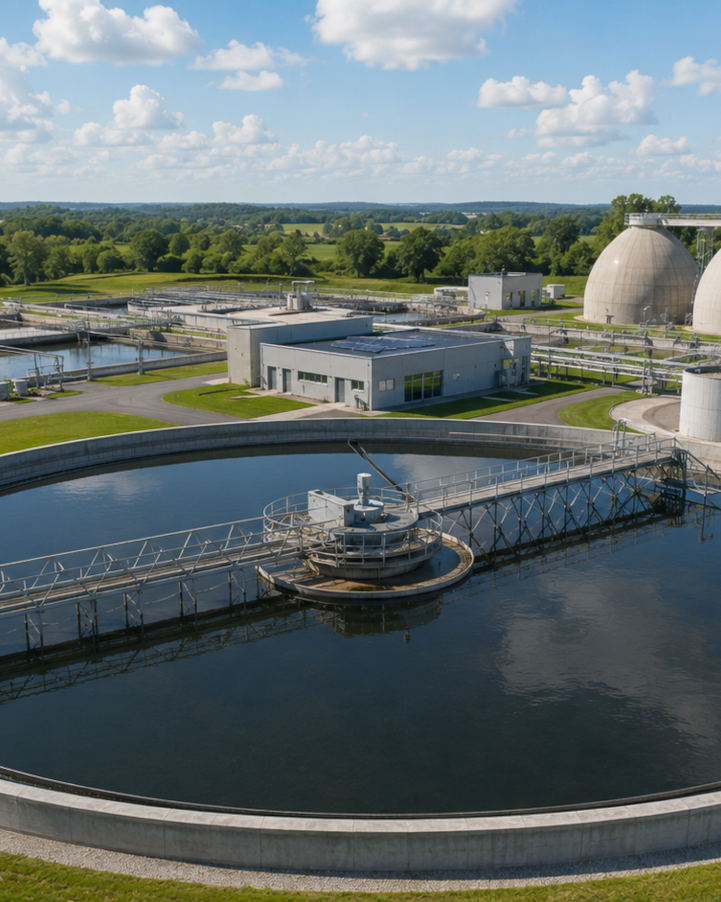
The “SuSyPhos” research project recovers phosphate and iron from sewage sludge ash, manure, and digestate from biogas plants to produce lithium iron phosphate for batteries. In this way, the project combines regional circular economy principles with more sustainable and independent European battery production.
Two Challenges, One Solution
Lithium-ion batteries are indispensable for electric mobility, energy storage, and mobile devices. However, the European battery market is heavily dependent on imports. In addition to finished battery cells, key raw materials must also be imported primarily from countries outside the European Union (EU). At the same time, large quantities of phosphorus-containing residues are generated in wastewater treatment plants and in agriculture. If too much phosphate enters water bodies, it can trigger excessive algae growth and harm ecosystems. Germany has therefore enacted a mandate for phosphorus recovery from sewage sludge, which will be phased in starting in 2029. Existing recovery methods often focus on phosphoric acid or fertilizers but are frequently not economically viable. SuSyPhos is therefore taking a different approach: The recovered phosphate is to be processed, together with the iron contained in the sewage sludge, into high-quality raw materials for battery development.
From Lake Aasee to the Project Idea
A key catalyst for SuSyPhos was the fish kill in Lake Aasee in Münster in 2018. Excessive phosphate from agriculture had triggered a severe algal bloom. Although the phosphate had previously been bound with iron salts, some of it was later released again. The researchers saw an opportunity in this: The resulting iron phosphate can be used as a raw material for lithium iron phosphate (LFP), an important material for batteries. Large quantities of iron phosphate also accumulate in sewage sludge. SuSyPhos is therefore investigating how phosphate and iron can be recovered from such waste materials and used for the production of battery cells.
First battery cells successfully produced
The results so far show that the process works. Phosphate can be successfully recovered from sewage sludge ash, digestion residues, and manure and used for the production of battery material. The individual process steps are currently being further optimized. The first functional battery cells have already been produced in the laboratory using the recovered material. At the same time, the project partners are investigating whether the process is economically viable and what its environmental impact is. The results are being compared with conventional LFP manufacturing processes.
Great Potential for North Rhine-Westphalia
North Rhine-Westphalia (NRW) offers particularly favorable conditions for the project. As Germany’s most populous state, NRW has numerous wastewater treatment plants and large quantities of sewage sludge. At the same time, the Münsterland region and other areas are heavily agricultural. Significant amounts of manure and digested slurry are produced there. SuSyPhos can help return the nutrients contained in these materials to regional recycling loops. In the future, collaborations could emerge between the agricultural sector, sewage sludge incineration plants, research institutions, and manufacturers of battery materials. This creates opportunities for value creation, jobs, and new business models.
The use of secondary raw materials can reduce nutrient surpluses, decrease phosphate depletion, and lower the carbon footprint of batteries. At the same time, dependence on critical raw materials, fragile supply chains, and individual supplier countries decreases. The project thus supports the EU’s goal of increasingly extracting, processing, and recycling critical raw materials within Europe.
From the Lab to Larger Scale
In 2026, the separation methods will be further improved, the processes scaled up, and integrated into a continuous process chain. By the end of the project in March 2027, the lithium iron phosphate recovered from waste materials is expected to be technically on par with commercially available material. A follow-up project is then planned to make additional waste materials usable for European battery production and to investigate further sustainable applications. In this way, the regional approach can serve as a model for Europe: raw materials remain in the cycle, environmental impacts are reduced, and a sustainable, competitive battery industry is strengthened.