SolaGrAm – Solar-Powered Green Ammonia Production
Ammonia is an important raw material for fertilizers and industrial applications. The ERDF-funded SolaGrAm project is developing a process that uses solar energy to produce nitrogen, a key component of ammonia. The goal is to make this production process—which has historically been energy-intensive and high in emissions—more sustainable.
Climate-Friendly Ammonia Using Solar Energy
Ammonia production currently accounts for about 1.5 percent of global CO₂ emissions. The SolaGrAm project is therefore developing an alternative to conventional methods: using solar heat to extract nitrogen from the air, which is needed for the production of green ammonia. The project builds on findings from the DLR’s predecessor project, SESAM—which was also funded by the ERDF and the State of North Rhine-Westphalia—and aims to advance the production of sustainable raw materials.
Solar energy instead of energy-intensive air separation
High-purity nitrogen is required for the production of ammonia. Until now, this has mostly been obtained through energy-intensive processes. SolaGrAm is developing a novel solar reactor that uses solar energy to efficiently extract nitrogen from the ambient air. This is expected to significantly reduce CO₂ emissions from ammonia production.
New Materials for Nitrogen Extraction
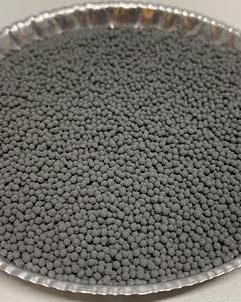
To produce ammonia in a climate-friendly manner, high-purity nitrogen is required first. Since air contains oxygen as well as nitrogen, the oxygen must be separated as efficiently as possible. This is where SolaGrAm comes in: The project is developing special oxygen-absorbing materials that capture oxygen from the air, thereby facilitating nitrogen extraction. Suitable materials are identified and tested using computer-aided analyses. The goal is to create the conditions for energy-efficient and resource-conserving production of green ammonia. In this way, the project contributes to a more climate-friendly basic materials industry and strengthens North Rhine-Westphalia as a hub for innovation in sustainable energy technologies.