RaVis 3D - Assistive system for people with visual impairments
People with visual impairments today also use the latest technical developments for orientation. Compared to other topics, however, this field is still in its infancy in many areas. The joint project of Ruhr-Universität Bochum (RUB) and several industrial partners has set itself the goal of changing this. Funded by the ERDF NRW 2014 - 2020 program, the project partners spent three years working on RaVis-3D, an assistance system for people with visual impairments.
Radar with 360-degree sensors
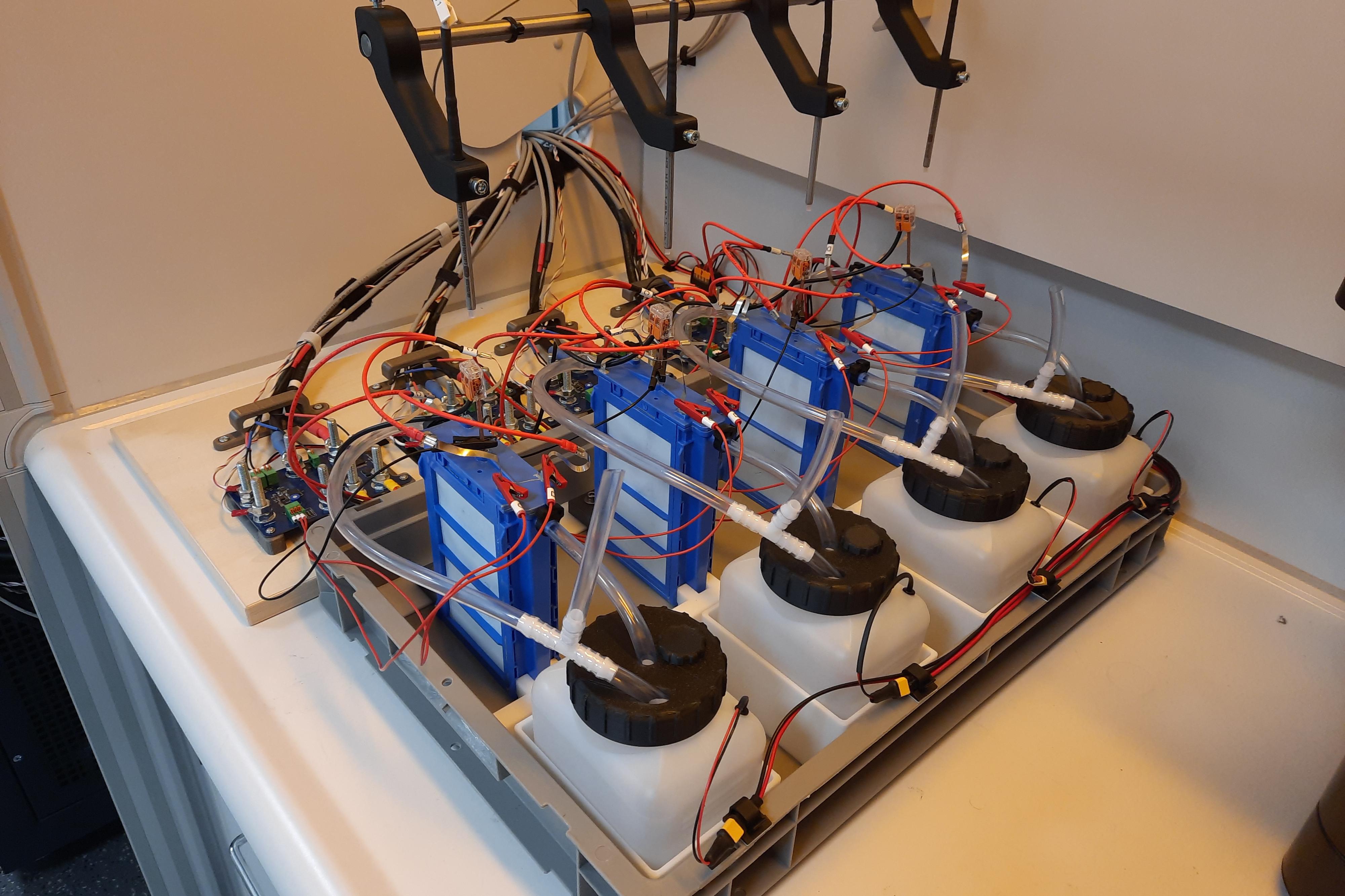
The aim was to develop and test a radar-based solution that captures the user's surroundings and translates them into audio signals that are output through semi-open hearing aids. To this end, researchers initially built various radar systems, such as rotating 360-degree sensors with special antennas that capture the user's field of vision, or directional sensors that measure the distance to a focal point. For the audio output of the environment, the system analyzed the noise environment, among other things, and then masked out the obstacles that emit sounds themselves. "Acoustically active obstacles such as a person speaking should not be presented as an obstacle by the system, as the user already perceives them anyway," says Prof. Rainer Martin from the RUB project team.
Tests by affected persons
The spatial localization of sources was further improved by measuring the individual hearing ability of the users. "We wanted to ensure that the sound of real obstacles or navigation instructions was integrated as accurately as possible into the user's natural acoustic perception," said Prof. Gerald Enzner. "We developed various sensors and systems for the project and tested them together with those affected," summarized Prof. Nils Pohl, who was also involved in the project. The astonishing thing was "that it was primarily the simple, intuitive systems that resulted in the most positive user feedback."
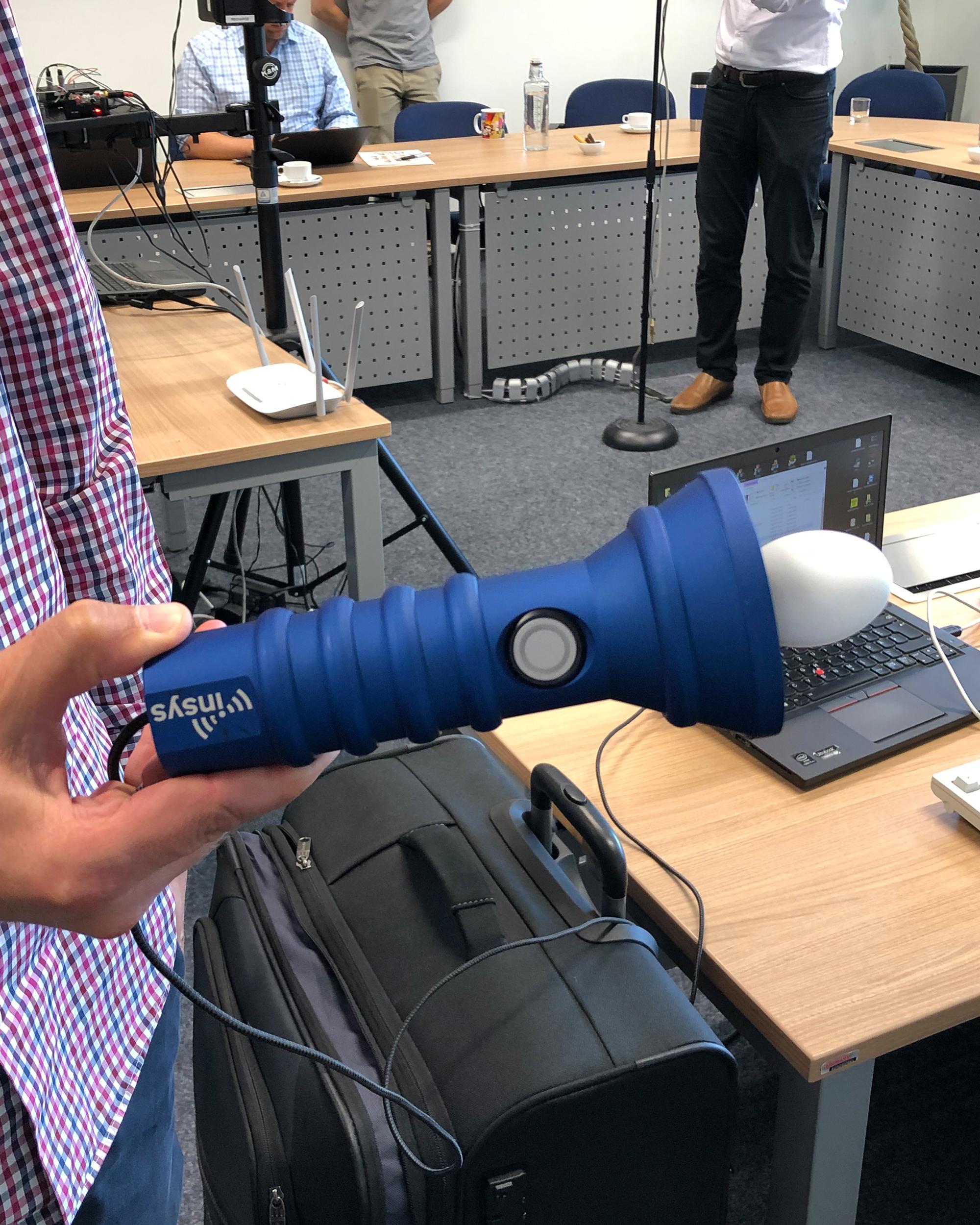
The task of the companies involved in the project, Kampmann Hörsysteme and SNAP, was to test the systems with those affected and to integrate the hearing aids for audio output. One system in particular stood out positively, explains Dr. Corinna Weber from SNAP: "We tested a relatively simple sensor system that can be held in one direction like a flashlight and then the distance to the next obstacle is output as a sound. In combination with the audio output via hearing aids, this results in an intuitive 'virtual cane for the blind' that works at a greater range and has been very well received by those affected."
Great marketing potential
The head of the consortium, Dirk Kampmann from Kampmann Hörsysteme, is certain that there is great marketing potential here: "Such a system is not yet available on the market. We now have to work on making the components smaller and cheaper and ensuring that the system integrates well with other IT-based aids for the blind, for example on smartphones." If this succeeds, the market for assistive devices for the blind could be enriched in the coming years.